TL;DR: Begin with 20 direct messages to creators who already know your category, then turn to Collabstr when you need a larger pool of candidates. TikTok One is the better fit for creator-posted ads. Whichever route you take, test three creators with the same brief, verify where their audiences are located, and track performance from installs through subscriptions. When you need repeatable AI demo videos, Wade is the shortcut.
As of September 2026, the best places to find UGC creators, people paid to make user-style videos, are direct TikTok and Instagram outreach, Collabstr, and TikTok One. Follower count can look reassuring, but for apps, category fit and usable ad rights matter more.
Start with direct outreach, use Collabstr to fill gaps, and move to TikTok One when creator-posted TikTok ads are part of the plan.
1. Direct TikTok and Instagram outreach finds problem-native creators
The strongest candidates are usually already discussing the problem your app solves, because they understand how that audience talks about it. A budgeting app should look for budgeting creators, not generic technology reviewers. Their existing language, settings, and audience questions are difficult to reproduce through a marketplace brief.
Start by searching TikTok and Instagram for your problem, category, competitors, and phrases users say. From there, open 30 accounts and save 10 that regularly cover the problem, then send the same short message to all 10. Follower count can wait until after you have checked their videos, since the content itself tells you more about fit.
Hi [name], I built [app], which helps [specific user] do [specific result]. Your video about [specific topic] sounded exactly like the problem we solve. I am hiring three creators for a paid test: one 20 to 30 second vertical video showing the app in use. This can be content-only, so you would send the file without posting it. Could you send your rate for one video, your rate for three, and your main audience countries?
A profile location does not prove audience geography, so this is worth checking separately. One iOS founder bought $15 videos and saw 28,511 first-week views, but comments requesting an Android version and other clues exposed a likely audience mismatch.
- Best for: Finding creators who already understand the user's problem.
- Typical cost: Set a test ceiling of $150 per creator and request one-video and three-video quotes.
- How fast: Send 10 messages tonight and follow up once after three days.
- Catch: You handle contracts, payments, usage rights, and audience verification yourself.
2. Collabstr is the simplest paid marketplace
Collabstr is a self-serve marketplace for UGC and influencer work, which means you can browse creator profiles and compare listed offers without first building an outreach list from scratch. The catch is that it is general-purpose rather than app-specific, so expect to remove many creators whose portfolios focus on physical products.
Collabstr becomes useful when direct outreach produces too few replies. Build a shortlist of 15 profiles, remove anyone whose portfolio is mostly unboxings or beauty products, and invite five people to the same paid test so their work is easier to compare. Ask for content-only footage unless you specifically need access to their audience.
- Best for: A solo founder making the first three to five hires.
- Typical cost: Quote-based; set your budget before searching and compare five equivalent deliverables.
- How fast: Shortlist and contact five candidates in one evening.
- Catch: App-demo experience and audience quality still require manual verification.
3. TikTok One works when TikTok is the distribution plan
TikTok One is TikTok's official creator marketplace. Business accounts use it on the web, while creators join through TikTok Studio. Because profiles can include industries, languages, contact details, and starting rates, it is useful when location and TikTok-native delivery matter.
TikTok One makes the most sense when you want the creator to post and may later run a Spark Ad, a paid TikTok ad that uses the creator's existing post. Before agreeing to the price, confirm that it includes posting, the authorization period, paid usage, and permission to turn the original into shorter edits.
TikTok One supports base pay, revenue share, or both. For the first creative test, base pay is usually the cleaner option because revenue share adds tracking and incentive complexity before you know whether the creator can explain the app clearly.
- Best for: TikTok posts you may turn into paid creator ads.
- Typical cost: Creator-specific, using base pay, revenue share, or both.
- How fast: Filter by industry and language, then invite five creators to one project.
- Catch: Marketplace eligibility favors established creators, and audience size still does not prove installs.
4. Wade replaces human sourcing for repeatable demo formats
Wade is an alternative when you need frequent TikTok, Reels, and Shorts videos rather than spoken creator scripts. Its AI creators are recurring characters with a consistent face, wardrobe, and setting, so the visual identity stays consistent. They handle text-over-face and hook-plus-demo formats, but they do not read scripts aloud.
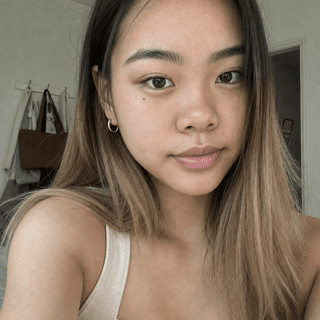
Emma
8 generated videos
Each video starts from a reference that performed in the same app category. The AI creator re-performs the opening, the hook text is added, and your screen recording becomes the demo. Creation takes minutes of founder time, mostly waiting, and there is a free trial and pricing page.
This option is not a fit when the concept requires dialogue or a script spoken to the camera. Because the assets are synthetic, keep records of them and use each platform's disclosure controls. YouTube requires disclosure for photorealistic synthetic content, while TikTok is increasing labels and detection of AI-generated spam.
- Best for: Repeated hook-plus-app-demo tests with a consistent character.
- Typical cost: Check the public pricing page after using the free trial.
- How fast: Minutes of founder time after supplying the screen recording.
- Catch: It is the wrong format when the script must be read aloud.
The four sourcing options compared
Common advice often gets this backwards by treating discovery as the hard part. A large creator directory may give you more names, but it does not give you a repeatable acquisition system. You still need comparable briefs, paid-use rights, geographic checks, and creator-level tracking from click through subscription.
| Option | Best use | Starting commitment | Main catch |
|---|---|---|---|
| Direct outreach | Problem-native human creators | 10 messages and three paid tests | Manual contracting and verification |
| Collabstr | Fast self-serve hiring | Five comparable creator quotes | General marketplace requires filtering |
| TikTok One | Creator-posted TikTok ads | Five invitations to one project | Rates vary and reach may not convert |
| Wade | Recurring AI demo videos | Free trial and one screen recording | Not suited to spoken scripts |
For the first batch, buy one video from three different creators rather than three videos from one person, then run the same app angle and call to action. Keeping those pieces consistent tells you whether the performer changed the result instead of mixing creator, message, and format into one unhelpful test.
How to screen the first three creators
A UGC brief, the written specification for the video, needs to constrain the result without forcing an unnatural performance. Send every candidate the same version, because that consistency is what allows you to compare execution.
Audience: [specific user with specific problem] Goal: Show how [app] solves [one problem] Deliverable: One 20 to 30 second vertical video, 1080 × 1920 First 3 seconds: State or show the problem before naming the app Middle: Show the real app completing one task with readable screen footage Ending: Say or display "Download [app] to [specific action]" Avoid: Generic praise, unsupported results, competitor logos, and extra features Files: Final video, clean app screen recording, and one version without captions Revision: One factual or technical correction included Rights: Quote content-only, 30-day paid usage, and creator posting separately
- Verify geography. Request a screen recording of audience countries, top cities, age range, and recent post analytics.
- Score five existing videos: hook clarity 3 points, demo clarity 3, natural delivery 2, technical quality 2. Require 8.
- Pay three creators for one video each. Do not request custom unpaid auditions or commit to a monthly package.
- Confirm content ownership, revision count, paid-use duration, posting obligations, and Spark Ad authorization before payment.
- Give each creator a unique link. Record clicks, installs, trials, and subscriptions, then wait one complete trial cycle before rehiring.
Learn more about this topic with AI
 Ask ChatGPT
 Ask Claude
 Ask Perplexity